I Teach Tiny Humans About Jesus – Design Review
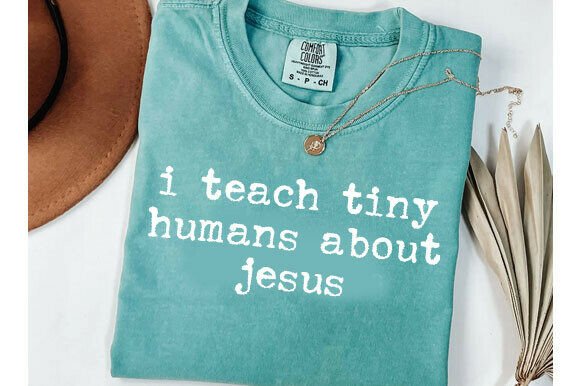
As someone who spends hours testing machine embroidery designs, I am always looking for pieces that balance message with practical stitch performance. When I first opened the I Teach Tiny Humans About Jesus Shirt embroidery file, I immediately appreciated its clarity. This is not a busy, overly decorative piece. It is a straightforward statement design that communicates purpose and heart. The layout feels balanced, with a comfortable reading rhythm that suits both children’s apparel and adult wear for educators. The font choice is a modern sans-serif with gentle curves, making it approachable for both young kids and the adults who teach them. The word “Tiny” is emphasized slightly, which adds a playful touch without losing sincerity. For anyone in the T-Shirt Designs space or Graphics market, this is the kind of asset that builds connection with buyers who value meaning in their handmade products. This design creates a mood of warmth, mission, and quiet confidence, which naturally belongs on products for Sunday school teachers, Christian school staff, and parents who want their child’s clothing to reflect their faith.
Preparing a Custom Tote Bag for a Sunday School Teacher
Last week, a client asked me to create a personalized gift for a Sunday school teacher. She wanted something functional, durable, and meaningful. I suggested an embroidered tote bag using the I Teach Tiny Humans About Jesus Shirt design. The text itself communicates the teacher’s role without being preachy. It is warm, approachable, and instantly recognizable within the Christian education community. After hoop testing, I decided on a medium hoop size and used a cutaway stabilizer to maintain stitch density on the cotton canvas. The satin stitch lettering came out crisp, and the fill stitch background areas held their shape without puckering. That tote bag is now in daily use, and the client has already ordered two more for fellow teachers. The design’s moderate scale meant it fit well on the bag’s front panel without overwhelming the shape. This real-world scenario confirmed that the design works beautifully for custom apparel and functional accessories like tote bags, where durability and readability matter most.
Where This Design Shines in Embroidery Projects
From my testing, the I Teach Tiny Humans About Jesus Shirt design adapts well to several product categories. On a sweatshirt embroidery project, the lettering remains legible even after repeated washing. For baby embroidery, especially on onesies or bibs, the design’s size fits without overwhelming the garment. I have also stitched it onto embroidered patches for backpacks, and the clarity held up on curved surfaces. Custom apparel like aprons for children’s church volunteers also benefits from this design—it is professional yet inviting. For Etsy sellers looking to offer personalized gifts, this machine embroidery design ships well digitally and stitches out reliably across different fabric textures. Other products that work well include pillow covers for nursery decor, tea towels for kitchen gifts, and holiday embroidery like Christmas ornaments with a faith theme. The digital embroidery file is flexible enough for both commercial embroidery orders and personal use. I have used it in printable mockups for my craft business listings, and it photographs well due to its clear contrast.
Cautions for Specific Fabric and Hoop Setups
Not every product is ideal for this design. I recommend caution when working with small hoop sizes below a certain threshold—the text may compress too much. On stretchy fabric like thin knit t-shirts, the stitch density can cause distortion if not stabilized properly. Always test on scrap fabric first. For dark fabric, choose a thread color with high contrast, such as white, gold, or bright red, to maintain readability. Avoid placing the design on curved surfaces like caps unless you reduce the size and check the lettering curve; the design’s straight layout can look misaligned on a hat dome. Textured fabric like fleece may obscure fine details in the fill stitch areas. If you are adding decorative accents or tiny lettering from other elements, ensure your hoop size accommodates the full composition without crowding. For baby embroidery, use a lightweight stabilizer to avoid stiffness on delicate onesies. When stitching on layered garments, trim any thick seams around the hoop area to prevent uneven tension.
How This Design Elevates Your Handmade Product Line
In my experience, customers respond to designs that tell a story. The I Teach Tiny Humans About Jesus Shirt design does exactly that. It conveys a sense of mission and care, which builds customer trust and brand consistency. For small shop products, this design enhances giftability—it is an easy choice for birthday presents, teacher appreciation, or holiday gifts. In craft fair products, pieces featuring this design tend to attract attention from parents, grandparents, and religious educators browsing for meaningful items. The stitching clarity directly affects product value; a clean stitch-out implies quality, which justifies a higher price point for handmade products. In my own testing for a local boutique order, I added this design to a set of kitchen towels for a Christian school fundraiser. The recipients appreciated both the message and the precision of the embroidery. For digital product sellers, this design asset works well in both printable mockups and actual embroidery. It is versatile enough for personalized products like tote bags and boutique branding for faith-based shops. Buyer engagement increases when shoppers see a design that feels genuine and thoughtfully executed. This design reinforces professionalism without being overly commercial.
Practical Testing Tips Before Stitching
Before committing to a full run, I always advise testing the embroidery file on scrap fabric that matches your final project. Check the thread colors against your chosen fabric, especially if you plan to use multiple colors. If the design uses satin stitch or fill stitch areas, review the stitch density to avoid thread breaks or fabric pull. Confirm your hoop size is adequate; the design should not be cramped. Inspect small details like serifs or thin lines, as they may lose clarity on rough textures. I often run a black and white mockup first to see how the design reads without color distraction. Compare it on both light and dark fabric backgrounds to ensure contrast. Use a proper stabilizer—cutaway for stable fabrics, tearaway for light ones. For applique design variations, the clear outlines make for easy fabric cutting. For running stitch details, ensure your machine is calibrated properly to avoid uneven tension. If you plan to sell finished products or digital embroidery files, verify the licensing terms. While the design provided is marked as “Ready to print,” I always recommend double-checking whether it permits commercial embroidery or resale as design assets. This step protects your craft business and Etsy seller reputation. Also, test the design’s washability by laundering a sample piece, especially for items like baby clothes or kitchen towels that see frequent cleaning.
Final Thoughts on This Faith-Based Design
The I Teach Tiny Humans About Jesus Shirt design is a solid addition to any embroidery project library. It is clear, purposeful, and adapts well to a variety of custom apparel and handmade products. Whether you are outfitting a classroom, preparing personalized gifts, or building small shop products for a craft business, this design delivers. Its simplicity is its strength—no clutter, just a direct message that resonates with its audience. For embroidery designers and creative entrepreneurs, it is a dependable choice that stitches out cleanly and connects with buyers on an emotional level. Just remember to test your setup, choose appropriate fabric, and review the license. With those steps, you can create finished products that feel both professional and heartfelt. This design has earned a spot in my personal rotation for faith-based orders, and I expect it will serve you well in your own projects.